Bingo Odyssey - Offline Games
- 4.6
- Rating
- 1.00M
- Installs
- Free
- Price
 Analysis by App-foxy
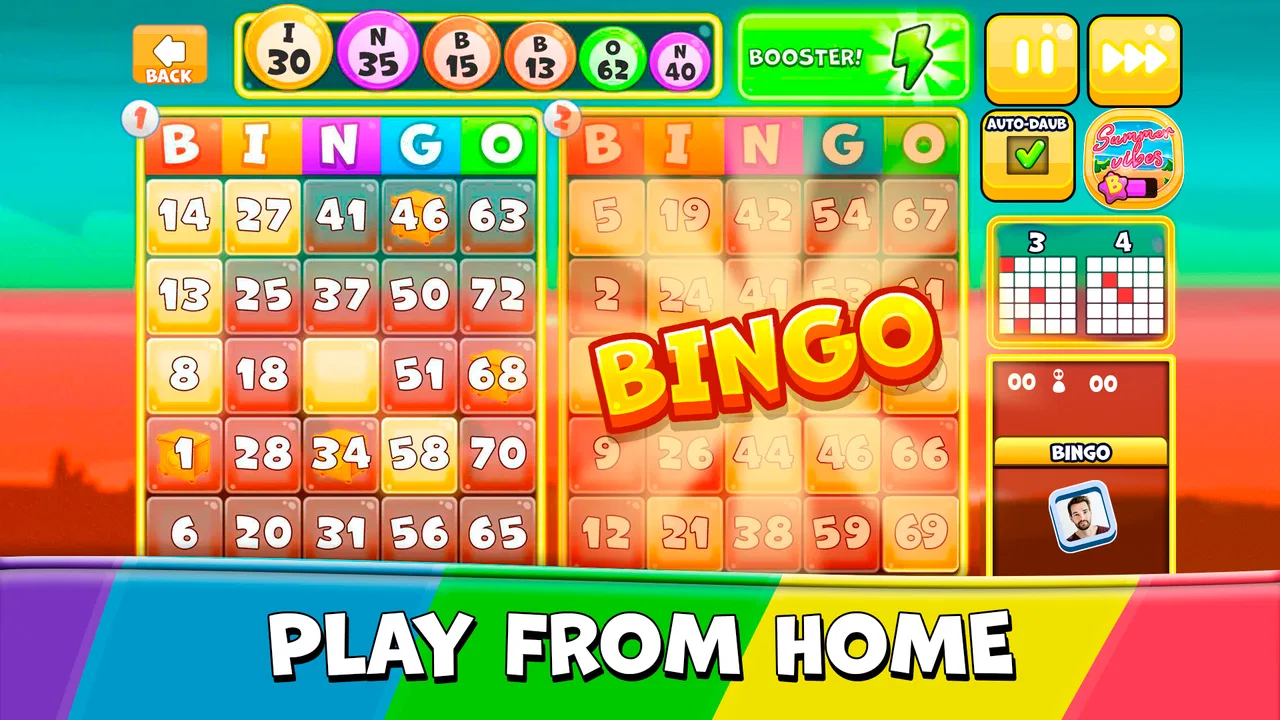
I picked up Bingo Odyssey - Offline Games expecting a simple way to fill a few quiet minutes, and that is still where I think it works best. It is a free board game from The Angry Kraken, built around bingo-style play, collectible-feeling daubers, and an offline-friendly approach. I found it easy to understand without a long learning period, which matters when a game is being passed around a household or opened by someone who does not usually play mobile games.
The useful distinction is that this is not trying to replace a serious strategy board game. Its appeal is lighter: short sessions, familiar rules, and enough visual variety to make repeated rounds feel less plain than traditional paper bingo. The game is rated Everyone, has reached over a million installs, and holds a 4.6 average from roughly eighteen thousand ratings. Those figures suggest a broad audience, but they do not remove the need to decide whether its particular style suits your home.
How Bingo Odyssey fits into shared household play
I find shared-device games work best when they give everyone a clear way to join in, even if only one person is tapping. With Bingo Odyssey, taking turns and letting others follow the card can make a quiet household break feel more companionable without turning it into a full group competition. The next section looks at how the game’s familiar board-game format shapes that balance.
You May Also Like

 Blood Strike: 2.5 Anniversary
Blood Strike’s Loadouts Turn Every Drop Into a Tactical Gamble
A close look at Blood Strike’s custom loadouts: how fast access to signature weapons reshapes its battle royale rhythm, rewards preparation, and narrows the gap between fights.

 Pandora - Music & Podcasts
Pandora’s Music Is Easy to Start, but Harder to Recover
Pandora’s strength is its low-effort path from a seed to a station. Its weak spot is how much confidence it asks you to place in connection, setup, and quiet recovery.

 8 Ball Pool
 Is Built on Rivalries, Rematches, and Routine
A close look at the rivalries, rematches, shared routines, and unanswered safety questions that turn a quick pool match into a persistent mobile community.

 Samsung Music
’s Quiet Strength Is Playing What You Already Own
Its reach comes less from spectacle than from dependable access to a personal library. That simplicity is both the app’s strongest retention engine and its ceiling.

 AccuWeather: Weather Radar
AccuWeather Review: A Quick, Clear Forecast for Everyday Decisions
For everyday plans, the best forecast is the one you can understand quickly. AccuWeather makes rain timing, radar, and local conditions easy to act on, with a few trade-offs.

 Hill Climb Racing
Why Hill Climb Racing Still Turns Crashes Into One More Run
A tiny car, a bumpy hill and one more upgrade: Hill Climb Racing keeps resurfacing because its simple chaos makes every near-miss feel personal.
More From Our News Desk



A practical game for passing around one device
In my experience, the strongest household use case is a shared tablet or phone during a low-pressure break. One person can play while another watches, then hand the device over without requiring everyone to learn a complicated control scheme. Bingo is naturally easy to explain: identify the called result, find it on the card, and daub it. That simplicity makes the game approachable for a child, a parent, or an older relative who may not enjoy action controls.
It also suits those moments when nobody wants to commit to a long session. A family waiting for food, sitting in the same room after dinner, or taking turns during travel can use it as a small activity rather than a central event. I would not describe it as a full group board-game replacement, because the experience remains centered on the person holding the device. Still, the spectator can follow the board and offer suggestions, which gives the game a modest social quality even when only one person is actively tapping.
The offline angle is especially useful for shared use. A household device may be taken into rooms with unreliable reception, or a child may use it somewhere that mobile data is intentionally unavailable. Being able to open a game without planning around a connection is a real convenience. I would still treat offline play as a practical advantage rather than a promise that every part of the experience behaves identically without connectivity. My recommendation is to test the game once before relying on it for a flight, a waiting-room visit, or a trip where there is no dependable signal.
Why the board-game category matters
As a board game, it rewards attention more than reflexes. That makes it calmer than arcade alternatives and less demanding than games built around rapid decisions. I like that balance for mixed-age use: the player can concentrate on the card instead of racing a timer or mastering a control layout. On the other hand, people who want deep planning, direct competition, or a rich multiplayer table may find the format too limited.
Compared with physical bingo, the app removes the need for cards, markers, and a caller. That is convenient, but it also changes the atmosphere. A paper set creates a shared table experience where everyone has a visible card. Here, the screen concentrates attention on one player. Compared with online bingo games, the offline focus is more attractive when privacy, data use, or dependable reception matters, although players looking for a large live community may prefer a connected alternative.
Setting expectations before anyone starts
The game is free to download, which lowers the barrier for trying it on a family device. It includes in-app purchases priced from $0.99 to $4.49 per item. I would explain that clearly before handing the device to a child, not because the game is unsuitable for younger players, but because “free” does not mean that every optional item is automatically outside the household budget.
For a shared device, I prefer a simple rule: the person playing can enjoy the available free content, while any purchase requires the device owner’s permission. That rule is more useful than assuming everyone will understand the difference between an in-game button and a confirmed purchase screen. I would also avoid leaving payment decisions to a child who is focused on completing a board. The game’s Everyone rating describes its broad age suitability, but it does not replace ordinary adult supervision around spending.
Account boundaries and handover habits
A game that is passed between people can become confusing if each player assumes progress belongs to them. I recommend agreeing on whose profile or device is being used before starting. If the household has one shared phone, treat the game as a common activity rather than promising separate personal progress. If different people use their own devices, each person should understand that their results and any purchases are connected to the environment where they play.
I would not create a complicated family system around it. The better approach is a visible household routine: one player at a time, no purchases without asking, and no resetting or changing settings while someone else is using the game. This is particularly helpful when a younger player wants to experiment and an older player wants a predictable session. The game itself can remain casual; the boundaries come from the people sharing it.
Before a handover, I like to let the current player finish the active round rather than interrupting halfway through. Bingo depends on noticing the board, so taking the device suddenly can cause frustration or make the next person unsure what has already been marked. A short verbal cue such as “this card is in progress” is enough. It sounds minor, but this kind of coordination is what makes a shared-device game pleasant instead of argumentative.
Small techniques that improve repeated sessions
One useful habit is to keep the screen at a comfortable viewing angle and brightness before starting. Bingo requires scanning a card, and glare or a cramped grip can make the game feel more tiring than it needs to be. When an older relative is playing, I would place the device on a stable surface rather than expecting them to hold it throughout the round. That turns the session into a more relaxed board-game posture.
I also recommend using the game as a short rotation rather than letting one person dominate the device. A five-minute turn can be enough for someone to enjoy the activity without making others wait indefinitely. This works particularly well with children, who may appreciate the visual reward of daubers but lose interest if the session becomes repetitive. The goal is not to maximize play time; it is to keep the game feeling like a shared break.
A third tip is to separate “watching” from “coaching.” Someone sitting beside the player may spot a result first and call it out, but constant instructions can make the active player feel as though they are not really playing. I find it better to let the player scan independently, then offer a hint only when requested. That preserves the simple satisfaction of finding and daubing the right space.
Age context and trust
The Everyone rating makes the game an obvious candidate for a broad household audience. The rules are familiar, and the board-game format avoids the intimidation of a complex role-playing or competitive action title. I could see it working for a child who wants an independent activity, provided an adult has already explained the household purchase rule and checked that the device is being used appropriately.
For parents, the main trust question is not whether a child can understand the bingo mechanics. Most can. The more relevant question is whether the child is ready to use a free game that offers optional purchases without tapping impulsively. I would introduce it on a shared device first, with the adult nearby, then decide whether independent use feels comfortable. That is a sensible approach for any game with in-app items, especially when the device belongs to more than one person.
Older players may appreciate the familiar premise, but the small-screen format can still be a barrier. If someone has difficulty reading compact symbols or distinguishing marked spaces, a larger screen is preferable. I would not choose this as the only entertainment option for a relative who needs highly adjustable visual presentation. In that situation, a physical bingo set or a game with clearly documented accessibility controls may be a better fit.
Where the free model creates friction
The purchase range is modest in absolute terms, but repeated optional spending can still change how the game feels. Players who enjoy collecting different daubers may be more tempted than someone who only wants a quick round. My advice is to decide in advance whether the household is treating those items as occasional extras or ignoring them completely. That decision prevents a casual game from turning into a series of small negotiations.
There is also a natural repetition limit. Bingo’s familiarity is its advantage at the beginning, but it can become predictable for players who need constant novelty or complex tactics. The visual extras may help maintain interest, yet they do not transform the core activity into a strategic board game. If your ideal evening involves negotiating trades, building an engine, or competing directly with several friends, I would choose a traditional digital board game instead.
The offline design has a similar trade-off. It is excellent when convenience and independence matter, but it is not the same as joining a live online room with friends. A household looking for real-time shared competition should look toward a connected multiplayer title. Someone who wants a dependable solo pastime, especially in places with poor reception, is more likely to appreciate this one.
Version, device fit, and first-session checks
The current version is 1.34, and the game requires Android 6.0 or later. That makes the minimum operating-system requirement relatively approachable for older compatible Android devices, though performance and screen size can still affect comfort. On a shared household phone, I would check storage space, battery level, and whether the screen is large enough for two people to watch without crowding around it.
My first-session routine would be straightforward. Install the game, open it while connected if possible, confirm that the board is readable, and try a short round before promising it as travel entertainment. Then show the intended player how daubing works and explain the purchase boundary. This takes little time and exposes the practical issues that a rating cannot: whether the device feels comfortable, whether the pace suits the player, and whether the visual presentation is easy to follow.
I would also avoid judging the whole experience from a single rushed round. The first session is mainly about learning the rhythm and seeing whether the daubers and board layout feel satisfying. After a few short turns, it becomes easier to tell whether the game offers enough variety for the intended player or whether the familiar bingo loop has already reached its limit.
Who should choose it, and who should skip it
I would recommend it to someone who wants a relaxed offline board game with recognizable rules and a low learning curve. It is particularly suitable for a shared device, a quiet solo break, or a household where players have very different gaming experience. The free entry point makes testing easy, while the Everyone rating supports its use across a wide age range when normal purchase supervision is in place.
I would be more cautious for people who dislike optional purchases, even when they are not required for the basic appeal. I would also steer away from it if your priority is live multiplayer, detailed strategy, or a physically social table experience. A physical bingo set is better for a group that wants everyone to hold a card, while a connected multiplayer game is better for friends who need remote competition. This app occupies the middle ground: more convenient than physical equipment, less socially complete than a live group game.
For a child who wants fast action, the calm pace may feel dull. For an older adult who struggles with small screens, the device may be the weak point rather than the game itself. For a frequent traveler, the offline design can be a strong reason to try it, but I would verify the setup before leaving home. These distinctions matter because the same feature can be a benefit for one household and a limitation for another.
My household verdict
After looking at it as a shared-device game rather than only a solo time filler, I see a clear and useful role for Bingo Odyssey - Offline Games. It is easy to explain, comfortable for short turns, and flexible enough for a family member who does not normally play mobile games. The offline emphasis makes it practical in places where a connected alternative is inconvenient, and the familiar bingo structure keeps the first session welcoming.
Its limits are equally clear. The player holding the device remains at the center, so it does not fully recreate a table of people with their own cards. Repetition may reduce its appeal for experienced gamers, and optional purchases mean that a shared device needs a simple household rule. Those are not reasons to reject it; they are reasons to install it with realistic expectations.
The developer, The Angry Kraken, has positioned this as a friendly board-game experience rather than a demanding competitive title, and that is how I would use it. I would put it on a family tablet, establish who may approve purchases, keep turns reasonably short, and use it for relaxed moments rather than expecting it to entertain a whole group for an evening. At no cost to try, it is worth considering for households that value simplicity and offline access. If your priority is deep strategy or genuine multiplayer interaction, choose another category of game; if you want a familiar, low-pressure bingo session that can fit around everyday life, this is a sensible pick.
FAQs for Bingo Odyssey - Offline Games
01What is Bingo Odyssey, and how does it differ from other bingo games?
Bingo Odyssey is a captivating offline bingo game that takes players on an adventurous journey through various mystical worlds. Unlike other bingo games, Bingo Odyssey offers a rich storyline, unique power-ups, and themed boards that add depth and excitement to the traditional bingo experience. Its offline capability also means you can enjoy playing anytime, anywhere, without needing an internet connection.
02Can I play Bingo Odyssey offline, and will I lose any features?
Yes, Bingo Odyssey is designed to be played offline, which is perfect for users who want to enjoy the game without relying on an internet connection. While playing offline, you still have access to all the core features, including the story mode, various bingo boards, and power-ups. However, some features like leaderboards and social sharing may require an internet connection.
03Are there in-app purchases in Bingo Odyssey, and are they necessary to progress?
Bingo Odyssey does include in-app purchases that allow players to buy additional power-ups, tickets, and other bonuses. However, these purchases are not necessary to progress in the game. The game is designed to be enjoyable and fully playable without spending money, though purchases can enhance the experience by providing extra resources and speeding up progress.
04How does Bingo Odyssey ensure fair play and prevent cheating?
Bingo Odyssey employs a random number generator (RNG) to ensure that each game is fair and unpredictable. The developers have implemented robust anti-cheating measures to maintain fair play, ensuring that all players have an equal chance of winning. Regular updates also help maintain the integrity of the game and address potential vulnerabilities.
05What age group is Bingo Odyssey suitable for, and does it contain any inappropriate content?
Bingo Odyssey is suitable for players of all ages, featuring family-friendly content without any inappropriate language or themes. The game’s engaging storylines and colorful graphics make it appealing to both younger and older audiences. Parents can feel confident that the game provides a safe and entertaining environment for their children.
Pros
- Engaging gameplay with various bingo rooms.
- No internet required for offline play.
- Visually appealing graphics and effects.
- Daily bonuses keep players returning.
- User-friendly interface for easy navigation.
Cons
- Limited variety in game modes.
- In-app purchases can be expensive.
- Ads can disrupt gameplay experience.
- Progression may feel slow without purchases.
- Occasional glitches in offline mode.

Bingo Odyssey - Offline Games
Gallery